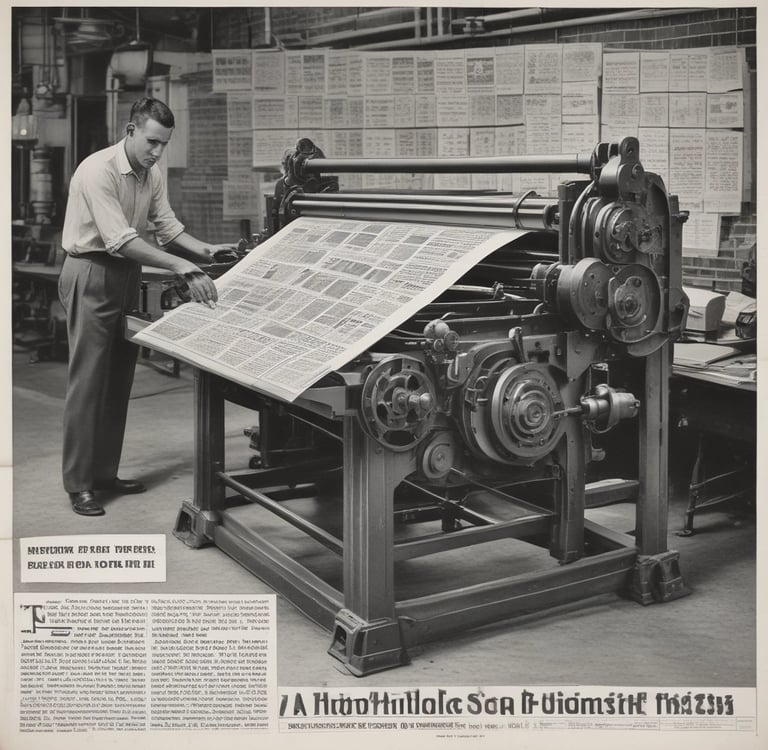
Advertising across the Millenia
Advertising has become faster, noisier, more measurable—and paradoxically less understood. Ogilvy’s work endures because it speaks to fundamentals that technology cannot replace: human attention, trust, memory, and meaning. Modern practitioners who survive long-term are those who use tools in service of judgment, not as substitutes for it.
Confessions of an Advertising Man — Section 1
Why Practitioner Credibility Still Matters
Ogilvy’s authority did not emerge from polish, popularity, or proximity to media power. It was accumulated the slow way: direct selling, disciplined research, managerial responsibility, visible mistakes, and conclusions earned through repetition in the field. He sold products face-to-face, learned how claims survived contact with real buyers, and absorbed the consequences when they didn’t. Later, exposure to formal research environments trained him to treat evidence seriously without worshipping it. By the time he wrote about advertising leadership, he had already paid tuition in embarrassment, payroll, and client risk. Credibility, in his model, was operational.
The contrast with the contemporary environment is stark. Today, legitimacy is frequently conferred by platforms rather than practice. Certifications, badges, conference appearances, and follower counts can substitute for scar tissue. Expertise becomes entangled with the current mechanics of distribution: whoever understands the dashboard appears authoritative. But tooling cycles are volatile. Interfaces change, algorithms move, targeting rules tighten, and yesterday’s advantage evaporates. When credibility is anchored to the platform rather than to the customer, it expires with the release notes.
This is why Ogilvy’s example still bites. He would recognize modern analytics as useful instrumentation, but he would distrust any practitioner who could not explain the buyer without looking at a report. The danger is subtle: numbers feel objective, so teams begin to treat them as reality rather than as partial representations of it. Measurement becomes a proxy for understanding. Optimization replaces curiosity. Marketing drifts toward what is easy to count instead of what is important to change.
The corrective is not anti-data; it is pro-contact. Durable authority still comes from proximity to lived behavior. Read support tickets until the vocabulary becomes familiar. Listen to sales conversations until objections become predictable. Use qualitative exposure to generate hypotheses, and quantitative tools to pressure-test them. When the two disagree, investigate rather than default to the spreadsheet.
What survives from Ogilvy is the professional stance: advertising is applied human psychology under commercial constraint. That sentence implies humility. Humans are messy, evidence is incomplete, and markets punish arrogance. Practitioner credibility, then and now, is the ability to navigate that uncertainty responsibly—grounded in reality, accountable to outcomes, and allergic to empty display.
If that foundation is missing, visibility may still arrive. Authority will not.
A Modern Practitioner’s Guide to
Confessions of an Advertising Man
Compiled explicitly for 21st-century operators: founders, growth leads, CMOs, agency principals, in-house teams, and independent consultants. originating from a 1963 book by David Ogilvy, founder of the advertising agency Ogilvy,
This is not a literary review. It is a field manual that translates Ogilvy’s doctrine into modern workflows, metrics, org design, and decision rules, chapter by chapter.
Confessions of an Advertising Man
A Modern Practitioner’s Guide (Then → Now)
Background on David Ogilvy →
Why Practitioner Credibility Still Matters
1. Then:
Ogilvy’s authority came from lived experience—selling stoves door-to-door, running research at Gallup, managing people, failing publicly, and learning empirically. Advertising leadership was earned, not branded
Now:
is often platform-derived (Meta-certified, Google-badged, TikTok-native) or visibility-based (followers, podcasts, personal brand). This creates fragile expertise tied to tooling cycles rather than durable understanding.
Modern Practitioner Rule:
If you do not understand the customer outside analytics, your insights are brittle.
Operational Constraints Today
Modern marketing organizations operate in an environment dominated by dashboards, attribution models, and automated reporting. While these tools provide speed and scale, they also create a structural constraint: decision-makers can become increasingly distant from the real human behavior behind the metrics. When teams rely exclusively on dashboards and pipeline summaries, they risk mistaking numerical signals for complete understanding.
The solution is deliberate proximity to the customer. Effective practitioners balance analytical visibility with firsthand exposure to customer interactions. This means regularly reviewing customer support conversations to understand real frustrations and language, listening to sales calls to observe objections and motivations directly, and grounding campaign decisions in both qualitative and quantitative evidence. Data identifies patterns, but human interaction explains them.
Operationally, the rule is simple: analytics should guide questions, not replace investigation. By combining qualitative insight with quantitative validation, organizations produce stronger hypotheses, make better decisions, and avoid the common failure of treating measurement as truth rather than as evidence requiring interpretation.
Modern Failure Mode
A common weakness in modern marketing organizations is the tendency to treat data as objective truth rather than as evidence that requires interpretation. Dashboards, attribution models, and analytics platforms produce precise numbers, which can create the illusion that they fully explain customer behavior. In reality, metrics only measure observable signals; they do not automatically reveal motivations, context, or causation.
This leads to a second mistake: confusing measurement with understanding. Teams may optimize campaigns based on what is easy to track-clicks, impressions, engagement-without asking whether those metrics reflect real customer value or meaningful behavioral change.
The corrective approach is analytical humility. Data should inform investigation, not replace it. Strong practitioners treat metrics as starting points for inquiry, combining quantitative signals with qualitative insight from customers, sales conversations, and real-world observation. When interpretation accompanies measurement, organizations move from simply tracking activity to genuinely understanding their market.
Ogilvy Principle That Survives
At its core, advertising is not primarily about media channels, creative formats, or technical tools. It is the practical application of human psychology in a commercial environment. The objective is to understand how people perceive value, make decisions, respond to trust signals, and remember brands—then translate those insights into messages that motivate action.
The constraint is commercial reality. Advertising must work within limits of budget, time, competition, and measurable business outcomes. Creativity alone is insufficient if it does not influence behavior or support revenue.
The practical takeaway is that effective advertising balances two disciplines: understanding human motivations and operating within economic constraints. When marketers focus on both—psychological insight and commercial accountability—they produce work that is persuasive, memorable, and economically meaningful.
How to Manage an Advertising Agency →
Managing Teams in an Always-On World
Then: Agencies were hierarchical, opinionated, and standards-driven. Mistakes were expensive and irreversible. Leaders protected quality ruthlessly.
Now: Teams are flatter, faster, and more fragmented. Velocity is rewarded. Iteration replaces gatekeeping—but standards often collapse.
Modern Practitioner Rule:
Speed without standards produces noise, not learning.
Modern Org Design That Works
Small cross-functional pods (strategy + creative + media + analytics)
Clear ownership of outcomes (not just channels)
Explicit quality bars before experimentation
Modern KPIs (Aligned with Ogilvy)
Learning velocity, not just output
Decision quality over activity volume
Retention and LTV, not vanity engagement
Modern Failure Mode
Promoting “tool power users” into leadership without judgment maturity
Confusing agility with lack of editorial discipline
Confessions of an Advertising Man
Managing Teams in an Always-On World
When David Ogilvy described agency management, he was writing for an era in which errors were expensive, slow to correct, and highly visible. A national print buy or a television flight represented commitment. Once released, the work could not be quietly patched. Under those conditions, hierarchy served a purpose: it concentrated judgment. Senior people acted as custodians of standards, protecting clients from amateurism, fashion, and internal politics. Taste was not decorative; it was risk control.
The modern environment reversed the economics. Digital systems allow continuous deployment. Creative can be swapped, budgets can be redirected, and campaigns can be tuned mid-stream. The promise is agility. The danger is entropy. When iteration becomes the organizing religion, teams may quietly abandon the idea that anything must be excellent before it ships. Volume masquerades as productivity. Busyness replaces responsibility.
Ogilvy would likely admire the speed but interrogate the discipline. Faster cycles increase the number of decisions; they do not eliminate the need for good ones. If anything, leadership becomes more important, not less, because fragmentation multiplies the surface area for error. Without explicit standards, acceleration simply scales mediocrity.
The organizations that function well today tend to rediscover structure in miniature. Instead of large departments handing work across silos, they operate in small cross-functional units—strategy, creative, media, analytics—bound together by a shared outcome. Accountability attaches to results, not to channel activity. Before tests run, teams agree on what “good” looks like. This pre-commitment is crucial; it prevents the quiet drift toward lowest-common-denominator output justified by the hope that optimization will rescue weak thinking.
Measurement, too, requires reinterpretation. Output volume is easy to inflate; insight is not. Healthy groups track how quickly they learn, how often decisions survive contact with reality, and whether customers stay longer or spend more. Retention and lifetime value discipline exuberance. They reward work that builds memory and trust rather than momentary interaction.
A persistent failure pattern emerges when technical fluency is mistaken for managerial readiness. Mastery of tools is valuable, but leadership demands judgment: the ability to say no, to delay, to insist on clarity, and to defend the brand when the data is ambiguous. Agility without editorial authority becomes chaos wearing sneakers.
The lesson is not nostalgic. It is structural. Speed is an amplifier. If standards are high, it accelerates excellence. If standards are vague, it industrializes noise.
Modern Acquisition Stack - Thinking as the New Portfolio
In the traditional agency world, business development relied heavily on polished pitch decks, speculative creative, and carefully staged presentations designed to impress prospective clients. Agencies demonstrated capability by showing what they could produce, often through speculative mockups or hypothetical campaigns. While these artifacts displayed craft, they frequently prioritized presentation over demonstrated thinking.
In the modern digital environment, the acquisition stack is evolving toward a more transparent and durable model of credibility. Instead of relying primarily on pitches and speculative work, organizations increasingly attract clients through publicly demonstrated expertise. The hierarchy of trust now favors evidence of thinking over demonstrations of style.
A modern acquisition stack often follows a progression:
Essays over posts.
Short-form social posts generate visibility, but long-form essays communicate depth. Essays allow practitioners to articulate frameworks, explain decisions, and reveal how they interpret markets and customer behavior. This format builds intellectual credibility rather than momentary attention.
Case studies over pitch decks.
Pitch decks promise potential outcomes; case studies document real ones. Detailed accounts of problems, decisions, experiments, and results show how a team actually operates under constraints. This evidence is far more persuasive to sophisticated buyers than hypothetical proposals.
Demonstrated thinking over speculative mockups.
Spec work often showcases design or creativity detached from real-world constraints. Demonstrated thinking-through research notes, analytical essays, teardown analyses, and operational reflections-reveals judgment. Clients increasingly seek partners who can think clearly about problems rather than simply produce attractive outputs.
The shift reflects a deeper change in how trust is established. In a world where publishing is easy and distribution is constant, expertise can be observed directly. Firms that consistently share their reasoning, frameworks, and lessons create a visible track record of decision-making quality. Over time, this body of work becomes a form of intellectual capital that attracts aligned clients.
The practical implication is that modern business development is less about convincing people during a pitch and more about educating them before the conversation begins. Organizations that publish thoughtful analysis, transparent case studies, and rigorous essays gradually build reputations as practitioners rather than performers. When prospects arrive, they already understand how the team thinks-and that clarity becomes the most persuasive credential.
Ogilvy-Compatible Tactics Today - Building Authority Through Clarity and Standards
David Ogilvy believed that credibility in advertising came from demonstrated judgment, disciplined thinking, and clear standards about the work worth doing. While the channels of communication have evolved dramatically since his era, the underlying professional posture he advocated translates remarkably well to the modern landscape. Today, the equivalent tactics revolve around visible thinking, transparent methodology, and selective partnerships.
Publish strategic points of view.
In Ogilvy's time, authority was often expressed through books, essays, and carefully argued opinions about advertising practice. In the modern environment, publishing strategic perspectives plays a similar role. Thoughtful articles, analytical essays, and public critiques of campaigns allow practitioners to reveal how they interpret markets, consumers, and creative strategy. These publications serve as intellectual fingerprints. Rather than merely claiming expertise, professionals demonstrate it through the consistency and rigor of their reasoning.
Teach your framework publicly.
Ogilvy frequently shared his principles openly-rules about headlines, research, client relationships, and creative standards. Modern practitioners can achieve the same effect by explaining their frameworks in public: how they approach market research, how they structure campaigns, how they evaluate creative work, and how they measure success. Teaching does not weaken competitive advantage; it clarifies it. When a firm openly explains its method, it signals confidence in the system behind its work and attracts clients who value that discipline.
Filter clients through values and constraints.
One of Ogilvy's strongest beliefs was that agencies should protect their standards by being selective about the clients they serve. Poor client relationships often degrade creative quality, strategic clarity, and organizational morale. The modern equivalent is to define clear boundaries around the kinds of engagements that align with the firm's capabilities and values. This includes specifying expectations around collaboration, research, timelines, and performance metrics. By articulating these constraints openly, agencies create healthier partnerships and reduce the risk of producing compromised work.
Together, these tactics shift business development away from persuasion and toward alignment. Publishing ideas establishes intellectual authority. Teaching frameworks demonstrates operational competence. Filtering clients protects the integrity of the work. In combination, they reflect a philosophy that Ogilvy would likely recognize: the best advertising organizations do not merely sell services-they cultivate a reputation for disciplined thinking and principled execution.
Modern Failure Mode - The Cost of Abandoning Selectivity
One of the most common operational failures in modern service businesses-especially agencies and consulting practices-is the instinct to pursue every inbound opportunity. In an environment where digital channels generate constant leads, inquiries, and requests for proposals, the temptation is to treat every potential client as revenue waiting to be captured. Activity begins to substitute for strategy.
At first, this approach appears productive. Pipelines stay full, meetings increase, and short-term revenue may rise. But over time the structural costs become clear. Not every client fits the firm's capabilities, pace, or working style. When organizations accept engagements without evaluating alignment, they often inherit mismatched expectations, unclear goals, and operational friction. Teams spend more time managing conflict than producing good work.
The downstream effects are predictable. Project quality deteriorates because teams are stretched across incompatible demands. Staff morale declines as employees are forced to execute work they know will not succeed under the given constraints. Leadership becomes reactive, solving problems created by poor client selection rather than focusing on strategic development. Eventually, the organization experiences the classic pattern of burnout and churn-burnout among staff who are overloaded with poorly structured work, and churn among clients who leave dissatisfied.
Selectivity, therefore, is not a luxury; it is an operational discipline. Healthy organizations treat client selection as a strategic filter rather than a sales hurdle. They define the kinds of problems they solve well, the conditions under which they can produce meaningful results, and the behaviors they expect from collaborators. Opportunities that fall outside those boundaries are declined early, before they consume time and organizational energy.
This principle echoes a deeper lesson: sustainable growth comes from alignment, not volume. When firms choose clients whose problems match their expertise and whose expectations match their process, work becomes more effective and more repeatable. Teams produce better outcomes, clients stay longer, and reputation compounds.
The real failure mode, then, is not simply chasing too many leads-it is forgetting that discipline in choosing clients is as important as skill in serving them.
4. How to Keep Clients →
Retention Is Still the Real Metric
Then: Long-term relationships, annual planning, trust built over time.
Now: Monthly contracts, performance anxiety, procurement pressure, dashboard tyranny.
Modern Practitioner Rule:
Transparency without interpretation destroys trust.
What Still Works
Educating clients on what metrics mean
Framing results in context (seasonality, lag, brand lift)
Defending long-term equity against short-term noise
Modern Retention Metrics
Net Revenue Retention (NRR)
Client lifetime value
Strategic scope expansion
Modern Failure Mode
Letting dashboards replace narrative
Optimizing for short-term ROAS at brand expense
5. How to Be a Good Client →
Why Clients Still Break Advertising
Then: Ogilvy blamed clients who micromanaged, ignored research, or chased novelty.
Now: Clients override data with anecdotes, chase platform trends, and panic weekly.
Modern Practitioner Rule:
Access to data does not equal data literacy.
What Good Clients Do Today
Set clear business objectives
Trust specialists
Measure outcomes, not tactics
Modern Failure Mode
“We saw a competitor do this on TikTok”
Confusing engagement with effectiveness
Surviving Bad Clients
Codify decision frameworks
Escalate evidence, not emotion
Exit misaligned relationships early
6. How to Build Great Campaigns →
Systems, Not Posts
Then: Campaigns were integrated systems across limited media.
Now: Campaigns fracture into hundreds of micro-assets across platforms.
Modern Practitioner Rule:
Optimization without coherence is brand erosion.
Modern Campaign Architecture
One central idea
Modular execution
Platform-specific adaptation without message drift
Modern Tools
Creative systems, not one-offs
Message testing hierarchies
Narrative control across touchpoints
Modern Failure Mode
Letting A/B tests fragment brand meaning
Treating platforms as strategy
7. How to Write Potent Copy →
Clarity Still Converts
Then: Headlines sold. Copy explained. Benefits mattered.
Now: Copy interrupts. Attention is scarce. Brevity dominates.
Modern Practitioner Rule:
Shorter does not mean simpler—clarity is still earned.
What Still Wins
Specificity
Proof
Relevance
Modern Copy Metrics
Scroll stop
Message comprehensionit.
own-funit.l conversion
Modern Failure Recall.
Vague brand engagement
rness without intent.consequence
8. How to Illustrate Advertisements →
Visual Hierarchy in a Scroll World
Then: Visuals had to stop the eye at a distance.
Now: Visuals have milliseconds.
Modern Practitioner Rule:
completion proof.Same still applies.
Modern Best Practices
Early brearly.g
Singular focal poinabstraction.
infast.es messagfast.t decorates it
Modern Failure Mode
Aesthetic-first crecall.e
Engagement without intent
9. How to Make Good Television Commercials →
Video Without Patience
Then: Captive audiences. Long-form persuasion.
Now: Skippable, silent, compressed.
Modern Practitioner Rule:
Memory matters more proof.completionprdiscipline.dern Vdiscipline.egy
Brandmanagement clairity
Demonstration beats abstraction
Story resolves fast
Modern Failure Mode
Optimizing for watch time, not recall
10. Food, Tourism, Medicines →
Trust Is the Product
Then: Sensory appeal, imagination, credibility.
Now: Influencers, UGC, compliance overlays.
Modern Practitioner Rule:
Trust scales slower than reach.
Modern Best Practices
Authentic proof
RegulatCareer leverage comes from judgment,
Repuvelocity
the Young →
Mastery Beats Hustle
Then: Learn the crstandards.d cynicitruth.
Now: Hmanipulation.e, tool-chasing, burnout.
Modern Practitioner Rule:
Career leverage comes from judgment, not velocity.
12. Should Advertising Be Abolished? →
Ethics at Scale
Then: Advertising informed choice.
Now: Surveillance, manipulation, fatigue.
Modern Practitioner Rule:
The problem is not persuasion—it is unaccountable persuasion.
Ogilvy’s Likely Verdict Today
Raise standards
Reward truth
Punish manipulation
Final Practitioner Summary
The More Things Change, the More They Stay the Same
Advertising has become faster, noisier, more measurable—and paradoxically less understood. Ogilvy’s work endures because it speaks to fundamentals that technology cannot replace: human attention, trust, memory, and meaning. Modern practitioners who survive long-term are those who use tools in service of judgment, not as substitutes for it.
Advertising did not become obsolete.
Standards did.